
- Main
- Artists' works
- 5–15–20
Ziyatdin Emine
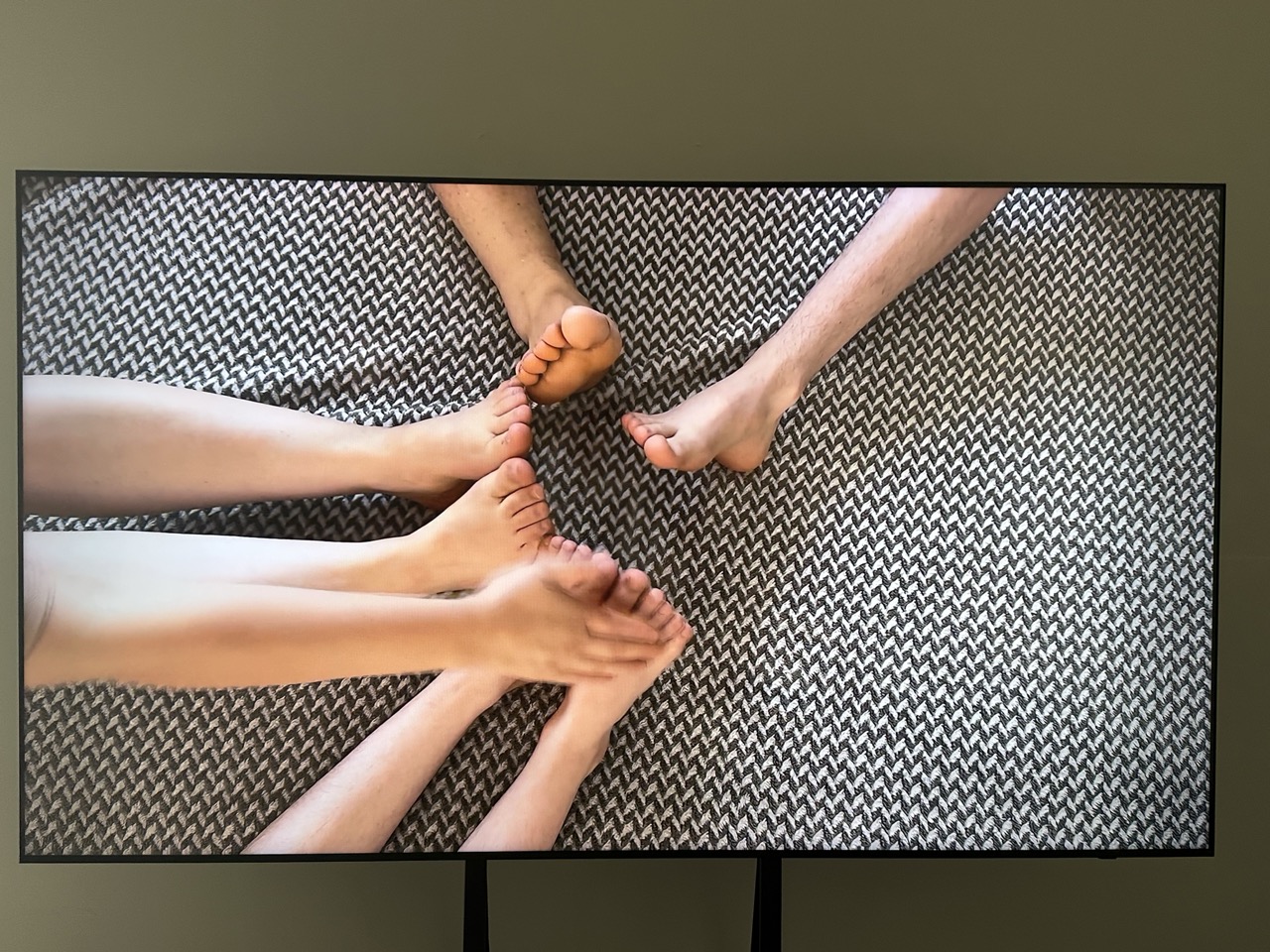
“5-15-20” explores the rupture between colonial Russian-Soviet narratives and family stories, between the place of Crimea and its Indigenous people, the Crimean Tatars. For decades, prevailing colonial narratives — rooted in Soviet discursive cleansing — have reduced Crimea to a seaside resort or military outpost, erasing its living culture and history.
In this video, everyday scenes of children’s rhymes, games, and a simple melody played during a celebration evoke longing for a missing homeland. Viewers do not need to understand the language to feel the emotions carried in these acts. Yet, to see the people behind the narratives and to recognize their culture requires an act of shifting perspective: moving aside the printed curtains bearing images of Russian soldiers and tourist views of the Crimean coast, familiar imagery through which most in Ukraine and abroad have come to imagine Crimea.
The title 5–15–20 refers to the prison terms — up to five, fifteen, twenty years — imposed on Crimean Tatars charged under fabricated accusations of “separatism,” “extremism,” or “terrorism” by Russian occupation authorities. These sentences mark not only the silencing of resistance but also years stolen from family life and the most intimate moments of belonging.

Emine Ziyatdin is a documentary photographer and independent researcher working at the intersection of documentary photography, history, archival practices, and visual art. She was born in Uzbekistan into a Crimean Tatar family deported from Crimea in 1944. She holds an MA in Sociology (Ivan Franko National University of Lviv) and an MA in Visual Communication with a specialization in Photojournalism (Ohio University, USA). She lives and works between London, UK, and Kyiv, Ukraine. Her artistic practice focuses on themes of collective memory, identity, a decolonial perspective on Crimean Tatar history, and the exploration of exile and the loss of home.
In her work, Emine combines photography, archival images, oral histories, and visual narratives. Her long-term project Crimea. Home is a visual chronicle of the Crimean Tatar community’s experience before and after Russia’s occupation of Crimea in 2014. Since 2008, she has been documenting the everyday life of Crimean Tatars, political transformations, and the shifting concept of home shaped by state repression and propaganda.
Currently, Emine is working with family photographic archives from Crimea and places of deportation, and is creating a book of oral histories about Crimea based on interviews she recorded in 2008. Her practice seeks new visual forms to reflect on collective memory and the trauma of displacement.
Her works have been published in The New York Times, El País, Politico, National Geographic Ukraine, UNHCR, CNN Photo Blog, and other international media. She is also a co-founder of the Ukrainian Warchive project and a recipient of numerous international awards and grants in documentary photography and journalism.