- Main
- Artists' works
- Apartment No. 1
Khozhai Daria
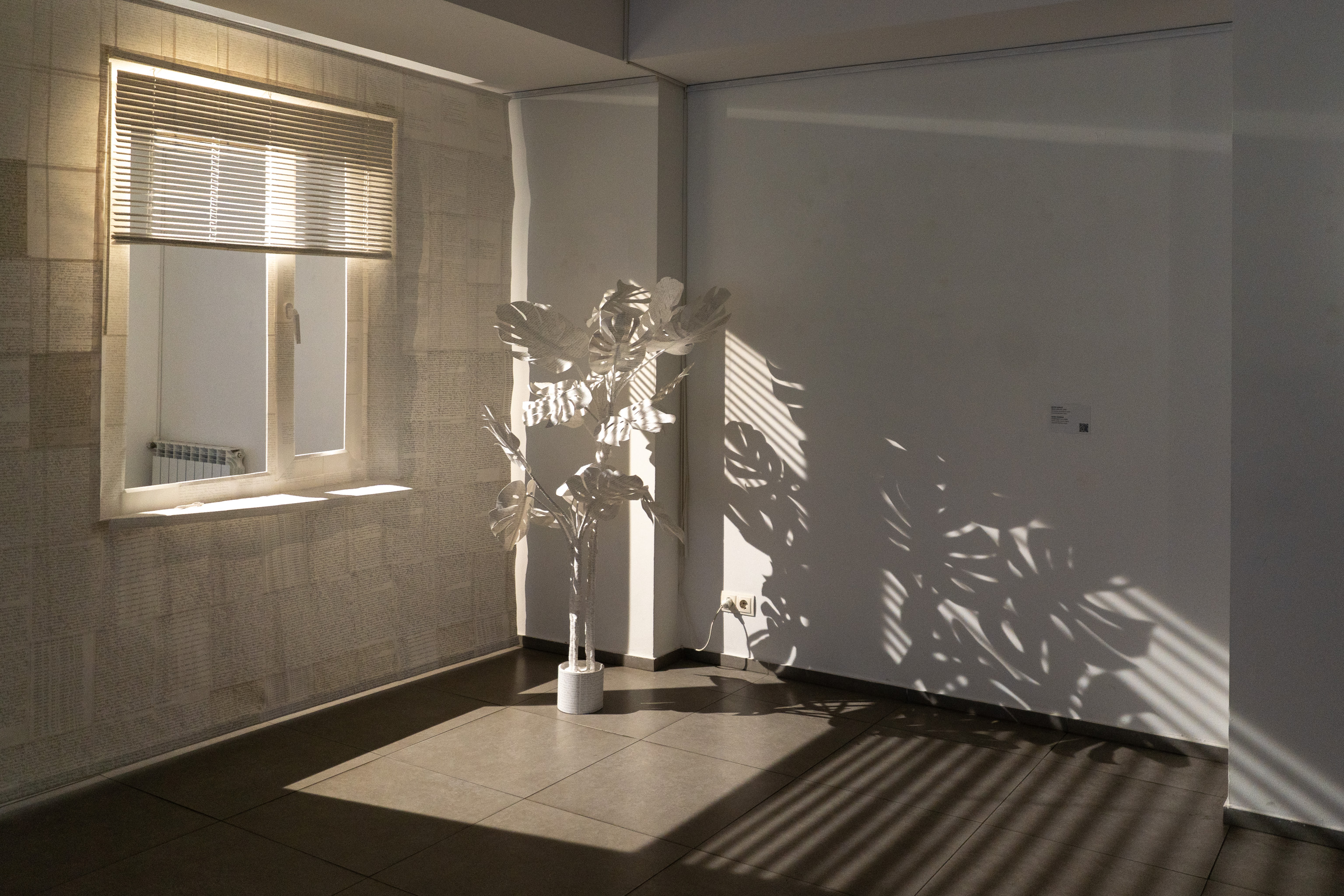
“Apartment No. 1” began as diary notes prescribed by my psychologist during rehabilitation after escaping domestic violence. Diagnosed with anxiety depression, I was advised to rest at home as much as possible. Yet the home, instead of offering safety, became a trap — every object, texture, and surface was saturated with memory. Over time, these notes transformed into a poetic, fragmented novel — a work of therapy and survival, where the interiors of the home mirrored shifting psychological states.
Each chapter enters a specific space — walls, windows, corridors, bedroom, basement, roof — where ordinary details reveal the weight of emotional cycles: walls accuse, windows watch, doors open only to ultimatums, while a spoon or a ring carry entire histories of shame and care. Woven between them are therapeutic interludes that name, in clinical terms, what I lived through: gaslighting, financial neglect, sexual pressure, abandonment. The result is at once a survival diary and a literary work of atmosphere and metaphor.
The installation “Apartment No. 1” translates this experience into full 1:1 scale. The entire interior is built from handwritten diary pages: a paper environment as fragile as the feelings it contains, as fragmented as memory, and as transparent as skin. Voices from the diary overlap in a shifting soundscape — the noise of consciousness where memory refuses to remain silent.
The project raises the question of the impossibility of starting from a “blank page”: even on a new sheet, we carry the traces of all previous ones. “Apartment No. 1” is not a reconstruction but a memory-room: an architecture of trauma and survival, where text becomes walls, the home becomes a body, and the body a vessel for everything it has endured.
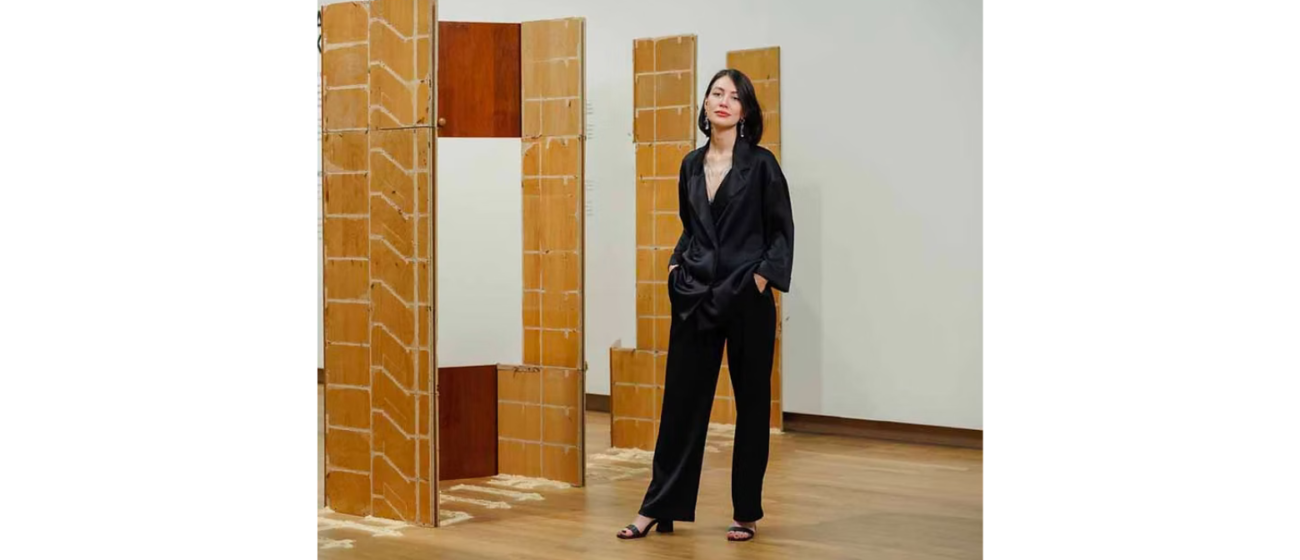
Ukrainian interdisciplinary artist and architect currently based in Amsterdam, with a background in Art (Kyiv Academy of Visual Arts), Architecture (Politecnico di Milano), and Cognitive Science (Amsterdam Medical Centre).
For six years, she has been developing a situation-specific approach by creating large-scale, site-, time-, and context-specific art installations as part of the core team at RAAAF. At the same time, she has conducted self-initiated research on Memory as both an individual, embodied experience and a collective, social phenomenon.
Her professional and personal experience led her to fuse experimental craftsmanship and architectural research with insights from academic psychology in her own artistic practice. She uses this approach to recognize and memorialize emotionally loaded spaces that have suffered profound traumatic events such as displacement, absence, and pain.
“Khozhai’s works are deeply personal translations of the public experience of loss and collective trauma. She uses her own sensitive reflections, memories and relationships to the past and present as a lens through which she examines the wider position and reflects on major problems at a global scale. She tries to facilitate environmental, social, and political activism through art. By materializing and exposing the collective turning points of our century.” – Nadine Snijders.
“That makes Khozhai’s work both artistically, historically, and educationally valuable. And helps to navigate grief and mourning in a world so defined by loss.” – Laurien Saraber (AFK).
She uses architectural (often immersive 1:1) scale models as her main artistic medium, because of their strong communicative, symbolic, and emotional power and their ability not only to materialize spaces but also to reveal the deeper stories often hidden behind façades.
She explores ideas of Memory, Nostalgia, and Sentimentality through the emotional significance of simple and familiar materials with their own stories and connections, able to trigger personal memories and activate collective ones. Her process of making is usually repetitive and obsessive, resembling rituals and traditions rooted in diverse heritages.