- Main
- Artists' works
- Duplicitas
Yuliia Holub
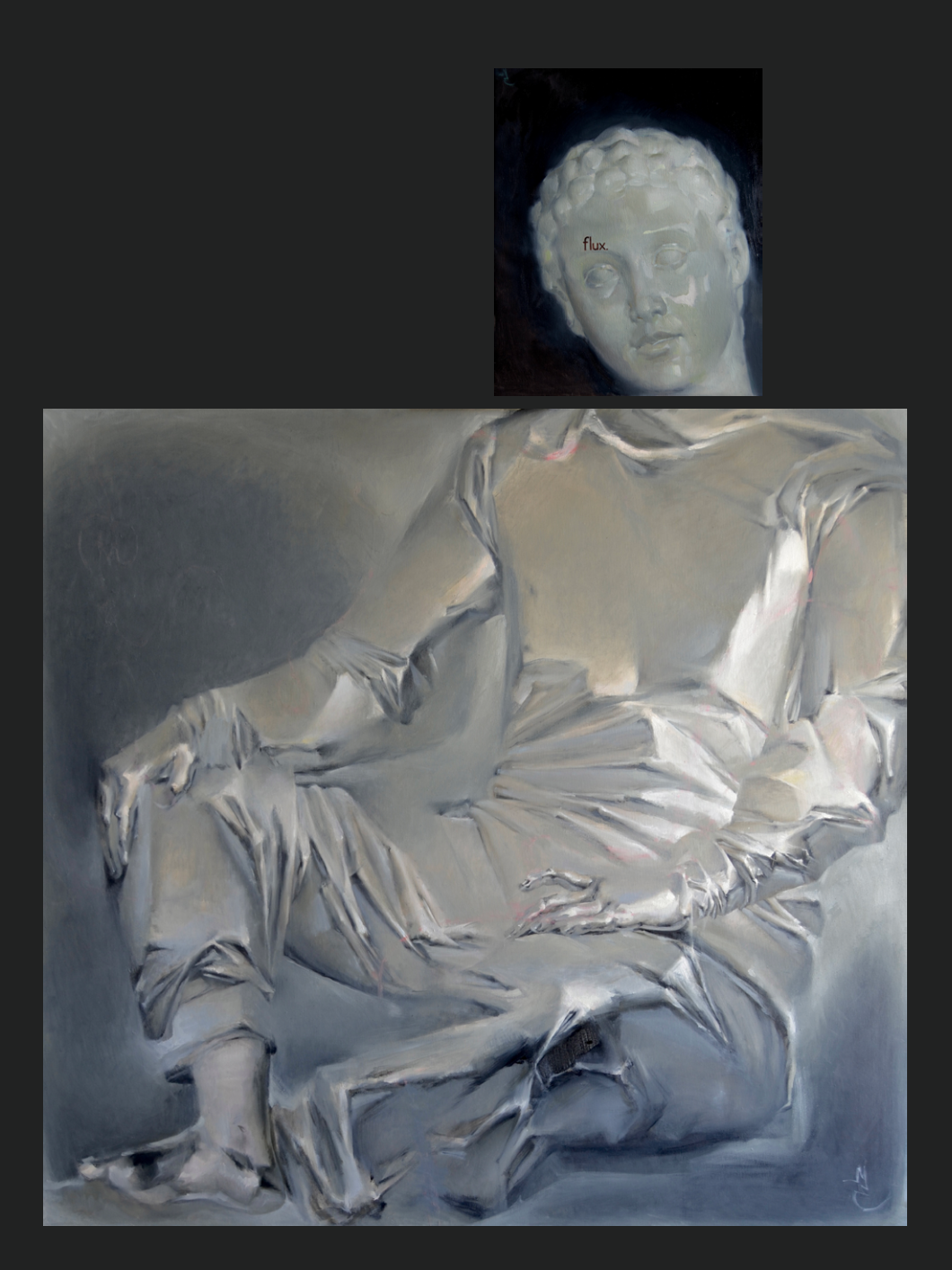
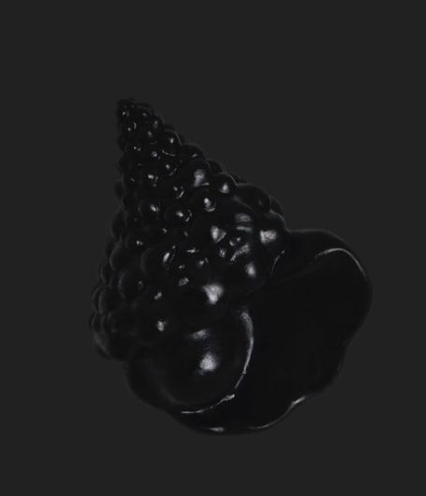
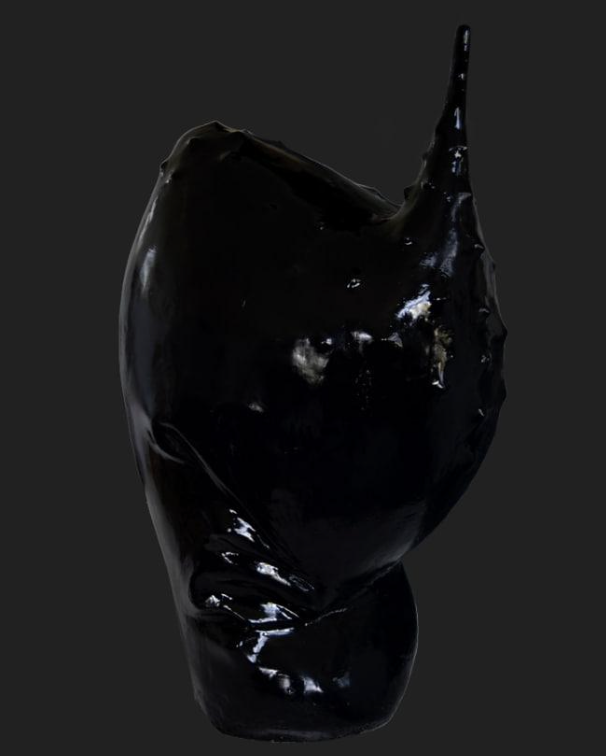
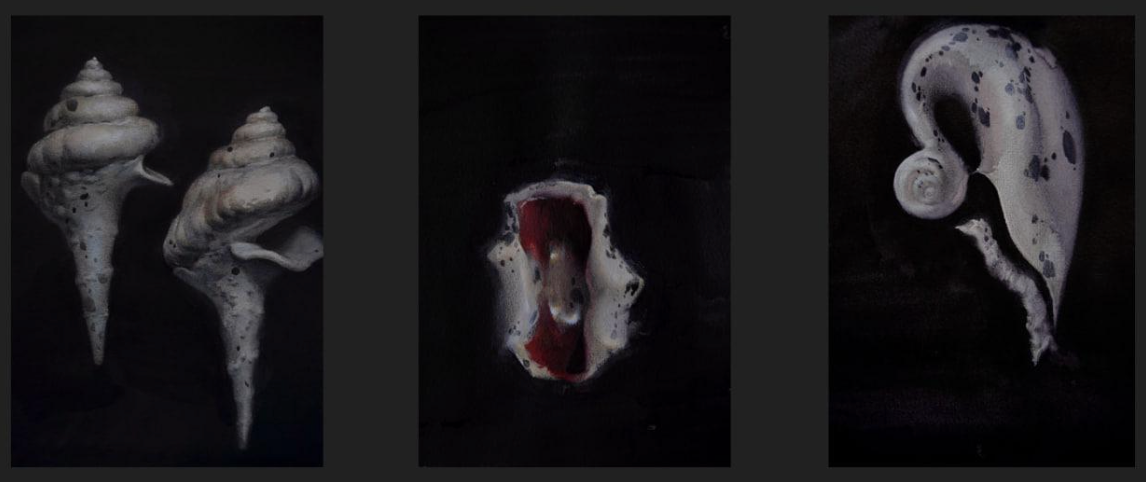
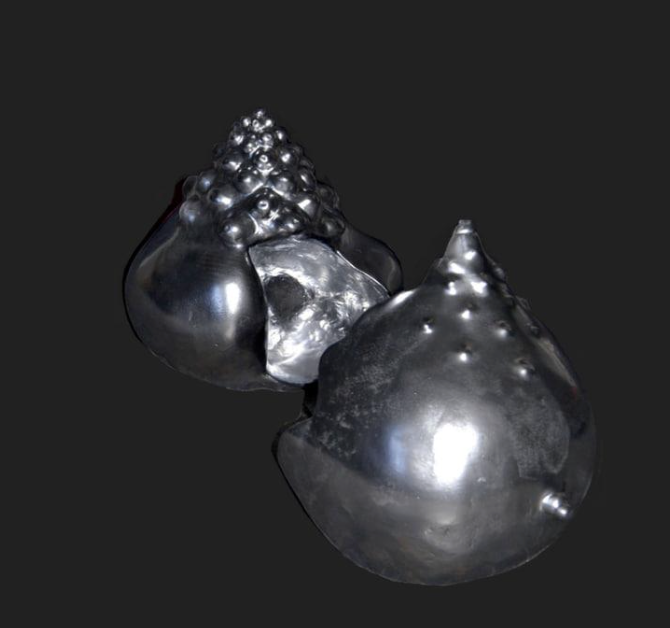
Duplicitas continues the EXUVIAE series, which investigates the subject’s evolving relationship to their own trace under conditions of instability and loss of integrity.
The diptych reveals an internal division. In the larger canvas, the body remains enclosed within its primal biological logic—the physical shell continues to respond instinctively. The detached fragment contains a projection of consciousness, where thought functions through meta-position, algorithmic structures, and conceptual reasoning.
Together, these parts represent a rupture between two speeds of human evolution: the inertia of the biological body and the accelerated development of reflexive consciousness.
Within the broader context of the series, this rupture is not seen as pathology. It is documented as a characteristic of the contemporary condition, in which humans increasingly relate to their own traces, creating images, archives, and fragments of presence.
Yuliia Holub is a Ukrainian artist working in painting and installation. Her practice centers on the human experience and the awareness of life’s fragility.
In her work, Holub rejects the idea of reincarnation as a concept that absolves responsibility for lived experience. Death, in this framework, is not a transition but a boundary beyond which the subject ceases to exist. At the same time, it becomes a point from which the meaning of a life lived can be assessed: everything that matters occurs here and now.
The artist does not illustrate concepts; rather, she works with forms that emerge from experienced states. Her works do not argue a point or explain a theory—they give material form to a condition that has already occurred.
Since the onset of the full-scale invasion, her practice has shifted from holistic imagery to fragments. In these works, conventional notions of the human no longer function, and experience manifests through ruptured structures and bodily reactions that are no longer suppressed. The absence of wholeness is neither masked nor compensated for; it is documented as a valid state.
Holub combines organic forms with metallic and mirrored surfaces. Surreal imagery serves as a method for engaging with experiences that have yet to acquire direct language. One of her key series, EXUVIAE, explores the transformation of what remains after the loss of subject integrity and may undergo dehumanization. Works in the series do not reconstruct narratives or propose models of healing; they document protective reactions to external influence.
Artworks Yuliia Holub