- Main
- Роботи митців
- Несуча Стінка, 2025
Хожай Дарія
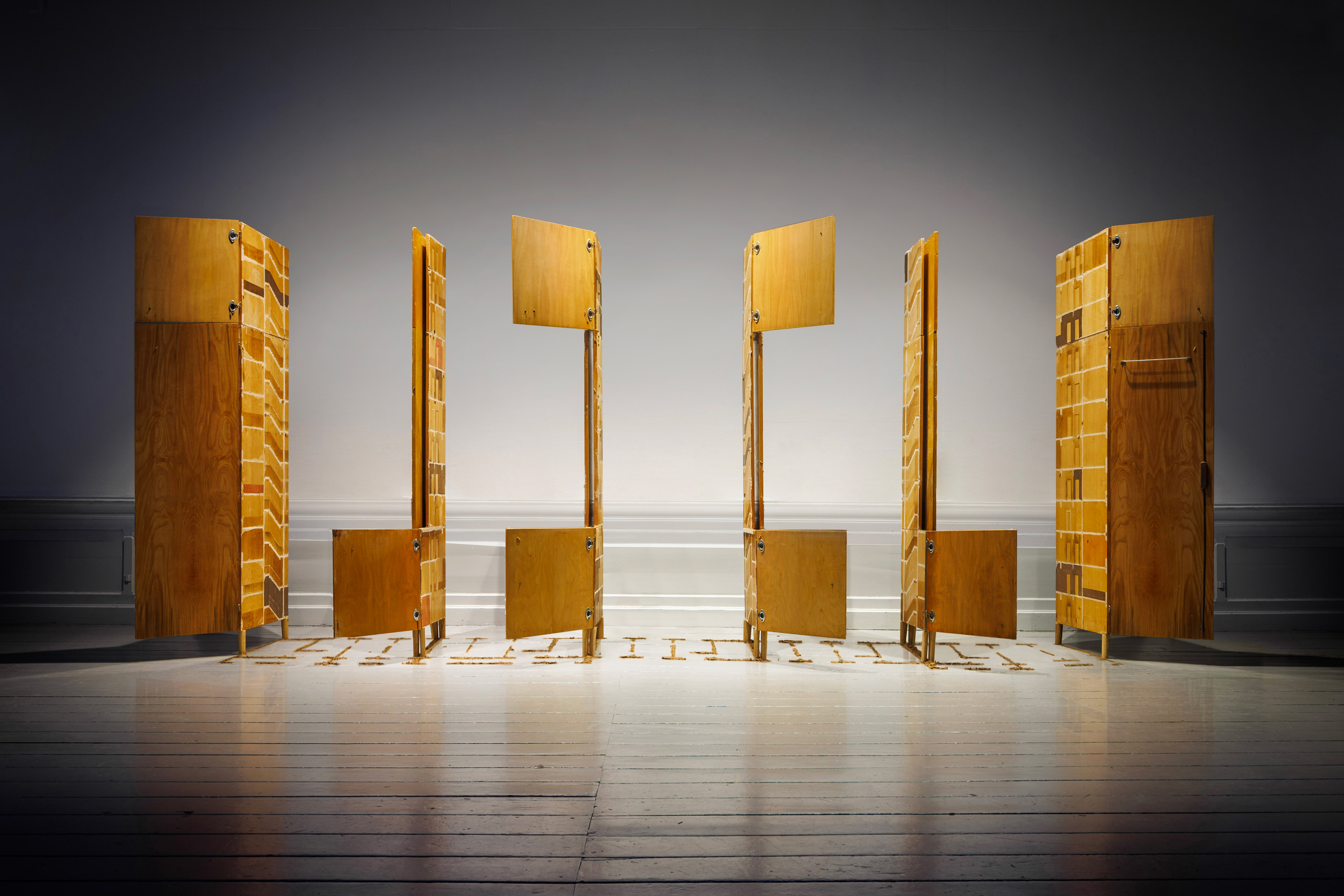
«Несуча стінка» виходить із образу «совєтської стінки» — меблевого об’єкта, що десятиліттями був емоційною та ідеологічною стіною кожного радянського й пострадянського дому. Важка лакована шафа з дзеркальними вітринами зберігала «правильні» речі: недоторканий кришталь як символ недосяжної мрії про розкішне життя, переписані й цензуровані книжки, сімейні реліквії. Вона відображала не лише інтер’єр, а й модель громадянина — мовчазного, слухняного, сформованого системою. В інсталяції оригінальна стінка 1980-х років трансформується в ляльковий будиночок масштабу 1:18 — типової радянської багатоповерхівки. Це не ностальгічна реконструкція, а розкриття ідеологічної конструкції: внутрішній простір, сформований страхом, втратою, виживанням і нав’язаною ідентичністю. Усередині з’являються паразити — личинки, що повільно проїдають деревину. Вони стають образом імперської системи, яку впустили у власні домівки й до якої звикли. Вона діяла через переписану історію та нормалізований контроль. Руйнування відбувалося непомітно — зсередини. Те, що тривалий час існувало як культурне стирання, нав’язування ідентичності та політичної залежності, переросло у пряму військову агресію. «Несуча стінка» говорить про те, як колоніальна спадщина продовжує жити в побутових структурах та пам’яті. Через архітектурну модель, матеріальну деградацію та повторюваний жест руйнування робота створює простір, де можна побачити правду, яку довго приховували за стінами — буквально й символічно.
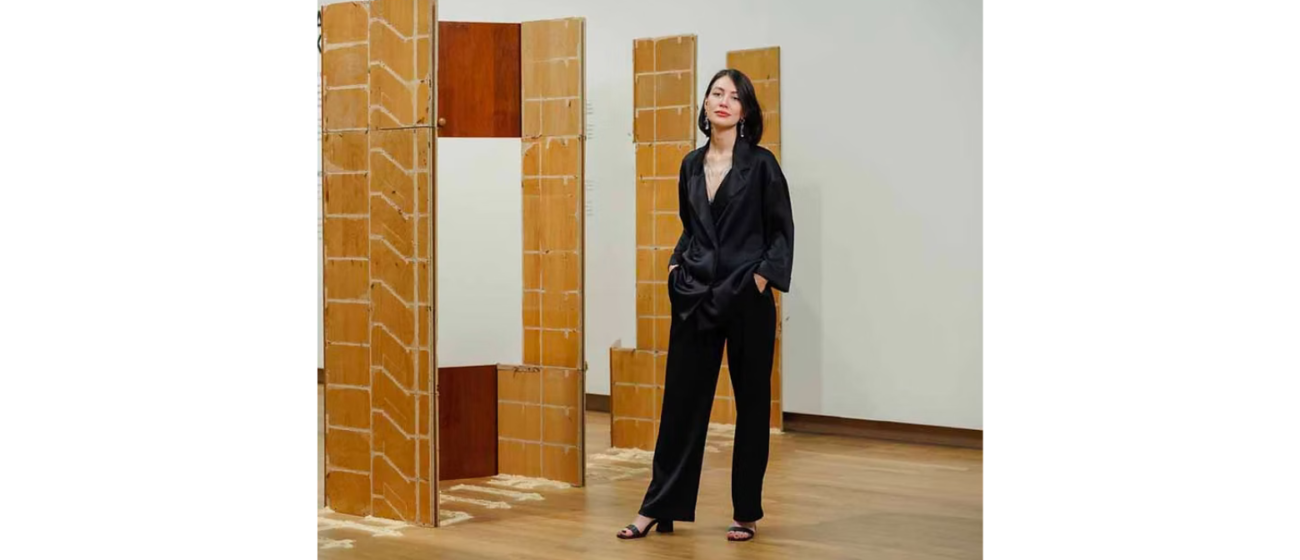
Українська міждисциплінарна художниця та архітекторка, нині мешкає в Амстердамі. Має фахову підготовку у сфері мистецтва (Kyiv Academy of Visual Arts), архітектури (Politecnico di Milano) та когнітивних наук (Amsterdam Medical Centre).
Протягом шести років розвивала підхід situation-specific art, створюючи масштабні інсталяції, прив’язані до простору, часу й контексту, у складі основної команди RAAAF. Паралельно здійснювала власні дослідження пам’яті — як індивідуального втіленого досвіду та як колективного соціального феномена.
Професійний і особистий досвід спонукав художницю поєднати експериментальне ремесло, архітектурні дослідження й напрацювання академічної психології у власній практиці. У такий спосіб вона прагне осмислити та увіковічнити простори, позначені глибокими травматичними подіями — вимушеним переселенням, відсутністю чи болем.
«Роботи Хожай — це глибоко особисте відображення суспільного досвіду втрати й колективної травми. Вона використовує власну чутливість, пам’ять та відношення до минулого і сучасного як оптику, крізь яку досліджує ширший контекст і відгукується на ключові проблеми глобального масштабу, намагаючись сприяти екологічному, соціальному й політичному активізму через мистецтво. Матеріалізуючи й висвітлюючи колективні переломні моменти нашого часу», — Надін Снейдерс.
«Роботи Хожай є водночас мистецьки, історично й освітньо цінними. Вони допомагають орієнтуватися в горі та жалобі у світі, що визначається втратою», — Лорієн Сарабер (AFK).
Головним засобом художниці є архітектурні моделі (часто у масштабі 1:1), адже вони мають потужну комунікативну, символічну та емоційну силу. Вони здатні не лише матеріалізувати простір, а й відкривати приховані історії, що стоять за фасадами, й нагадувати про тягар, який можуть нести ці місця.
У своїй практиці Хожай досліджує ідеї пам’яті, ностальгії та сентиментальності через емоційну значущість простих і знайомих матеріалів. Вони несуть власні історії та зв’язки, здатні викликати особисті спогади й активувати колективні. Процес творення у її роботах зазвичай повторюваний, нав’язливий і нагадує ритуали та традиції, укорінені в різних культурних спадщинах.